The Stacked 2026 Best Actress Race and the Enduring Diversity Challenge
The stage is set for what promises to be one of the most compelling and hotly contested categories at the 98th Academy Awards: the
Best Actress Oscar 2026. With a blend of celebrated veterans, critically acclaimed indie darlings, and powerhouse performers tackling ambitious roles, the competition is already shaping up to be a true clash of titans. Beyond the individual performances, this year's race carries a significant historical weight, particularly regarding the persistent challenge of diversity within Hollywood's most prestigious acting category. The narrative surrounding who will ultimately take home the gold statue is intertwined with broader discussions about representation, opportunity, and the evolution of the industry itself.
Formidable Frontrunners and Early Buzz: Who's Leading the Pack?
As the 2026 Oscar season begins to stir, early predictions are already swirling, offering a glimpse into the potential contenders vying for the coveted Best Actress award. While much can—and inevitably will—change, these initial conversations are crucial for building momentum and establishing an actor's presence in the awards landscape.
Right now, a standout name generating significant buzz is
Renate Reinsve for her role in *Sentimental Value*. Her strong position is often attributed to the simple fact that critics and voters have had the opportunity to see her performance, allowing it to resonate early in the cycle. This early exposure often grants a film and its star a temporary advantage, setting a benchmark for others yet to be seen. Reinsve’s nuanced work is predicted to be the kind of performance that could earn a single, major award for its film, demonstrating the Academy’s appreciation for distinct, well-executed artistic endeavors.
Another legendary figure entering the fray is
Julia Roberts, whose performance in *After the Hunt* is whispered to be her most impactful since her Oscar-winning turn in *Erin Brockovich*. Roberts, known for her charismatic screen presence, is reportedly tackling a role that allows her to play slightly against type, coupled with a powerful script—a combination that often proves irresistible to Academy voters. Her enduring star power, combined with a potential career-redefining performance, makes her a very strong contender.
Also highly ranked is
Amanda Seyfried for her anticipated role in *The Testament of Ann Lee*. Seyfried has consistently delivered compelling performances throughout her career, and this role is hoped to be a true showcase for her talents, pushing her into the upper echelon of nominees. The buzz around her performance is driven by high expectations, suggesting a potential breakout moment.
And then, there's
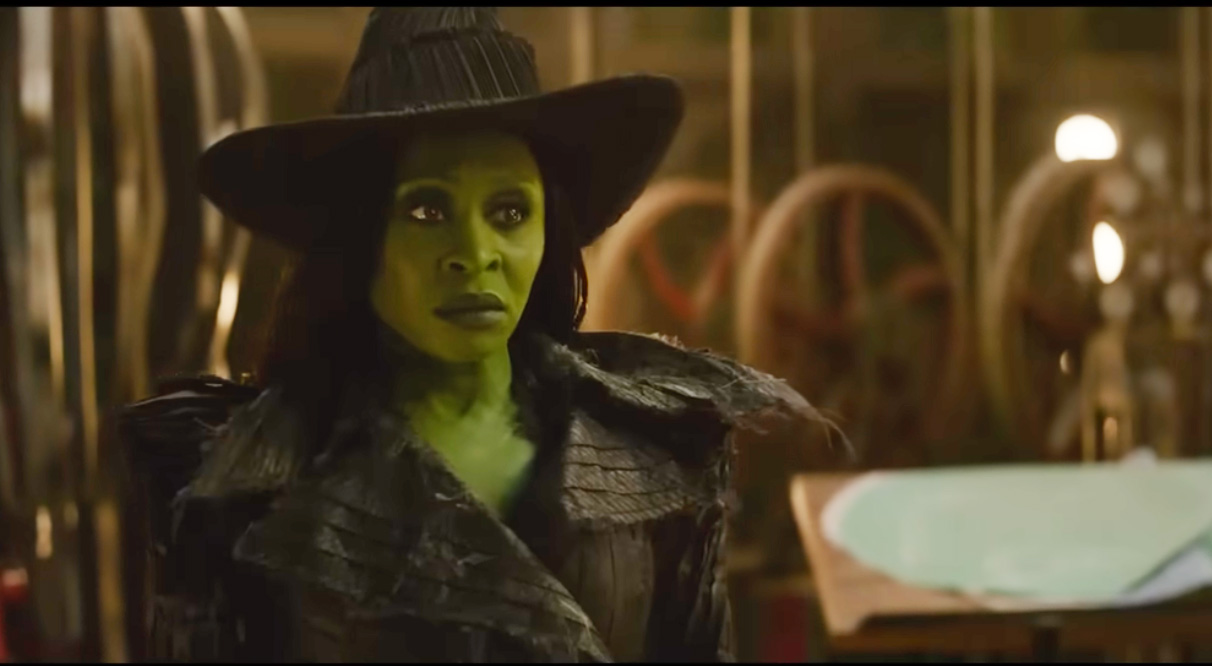
Cynthia Erivo. While currently ranked a little lower than the aforementioned names in some early charts, her position is anything but certain. The sheer anticipation surrounding her performance in *Wicked* (and *Wicked for Good*) guarantees her a prominent spot in the discussion. The dynamics of the Best Actress race are highly fluid; early rankings merely reflect current visibility, not definitive outcomes. As more films are screened and critical consensus solidifies, the landscape will undoubtedly shift.
Cynthia Erivo's Historic Push and the Weight of Expectation
The spotlight on
Cynthia Erivo for her role as Elphaba in Universal’s two-part musical epic, *Wicked*, is not merely about a powerhouse performance; it’s about history. The recent announcement that Ms. Erivo will be honored with the Kirk Douglas Award for Excellence in Film at the Santa Barbara Film Festival in December is a clear signal of Universal's strategic push for Oscar glory. This prestigious pre-cursor award often serves as a powerful campaigning tool, positioning an artist at the forefront of the awards conversation.
If Erivo were to secure the
Cynthia Erivo's Historic Push for Best Actress Oscar 2026, she would become only the second Black actress to win the Best Actress Oscar in the Academy's 98-year history. This monumental achievement would finally break a staggering 24-year drought since Halle Berry’s historic win in 2002. The implications of this are immense, highlighting a deeply entrenched systemic issue within Hollywood. While her performance in the first *Wicked* film is already garnering significant praise for its award-worthy quality, the weight of expectation and the historical context surrounding her potential win add layers of complexity to her campaign.
The Enduring Diversity Challenge in the Best Actress Category
The glaring 24-year gap since a Black actress last won the Best Actress Oscar is a stark reminder of Hollywood's persistent diversity problem, particularly when it comes to honoring Black women. This lack of recognition comes despite years of public outcry, the so-called "Great Awokening," the implementation of DEI (Diversity, Equity, and Inclusion) mandates across the industry, and even the public shaming and subsequent reforms of institutions like the Golden Globes for charges of "racism."
The industry's response, while attempting to appear progressive, has often been critiqued for its superficiality. The shift in discourse from specifically celebrating "Black women" to the broader category of "women of color" (as seen with Michelle Yeoh's groundbreaking win) is often perceived as a dilution. While celebrating all women of color is vital, it can inadvertently obscure the unique challenges and lack of specific recognition faced by Black actresses, who continue to have a steeper uphill climb.
One significant barrier identified is the often-limited range of roles made available to Black women. Historically, these roles were confined to narratives of suffering—slaves, sex workers, drug addicts, or impoverished mothers. While those portrayals hold their own painful truths, the contemporary landscape, in a misguided attempt at "absolution," has often swung to the other extreme. Black women characters, and Black characters in general, are frequently elevated to almost symbolic, religious archetypes—perfect, infallible, or saintly. While seemingly positive, this trend can inadvertently strip characters of their genuine human agency, rendering them "boring" or mere "tokens" rather than fully fleshed-out individuals. For instance, while Cynthia Erivo's performance in *Wicked* is undeniably powerful, her character, Elphaba, embodies a certain symbolic weight, representing otherness and power. The challenge for Black actresses lies in consistently finding roles that offer complexity, agency, and human nuance beyond a symbolic function. True diversity means not just seeing more faces, but seeing them inhabit the full spectrum of human experience on screen.
Navigating the Oscar Campaign Trail: Beyond the Performance
Winning a Best Actress Oscar involves much more than just delivering a stellar performance. It's a strategic dance that begins long before the nominations are announced and culminates on Oscar night. Understanding these underlying mechanics is crucial for any contender.
1.
Studio Campaigning and Narrative Building: Major studios invest millions in their awards campaigns. This includes lavish screenings, Q&A sessions with talent, strategic placement at film festivals, and extensive advertising. For a contender like Julia Roberts, her studio will leverage her superstar status and craft a narrative around a "career-best" or "return to form" performance. For a newer face like Renate Reinsve, the narrative might focus on a "breakthrough" or "revelatory" performance that demands recognition. In Cynthia Erivo's case, Universal is clearly building a "historic opportunity" narrative.
2.
Critical Consensus and Industry Buzz: Sustained positive reviews are paramount. An early rave can ignite buzz, but maintaining that critical adoration throughout the long awards season is key. Film critics' groups, guilds (SAG, BAFTA, Critics' Choice), and industry publications play a huge role in shaping perceptions. The "buzz" mentioned in the context, regarding names in circulation, is the nascent stage of this critical consensus building.
3.
Timing and Release Strategy: The release date of a film can be critical. "Oscar bait" films often debut in the fall, allowing for maximum exposure during the crucial voting period. This gives voters time to see the films, re-watch them, and form strong opinions.
4.
Voter Sentiment and Industry Trends: The Academy's evolving membership and its prevailing sentiment can significantly impact outcomes. While DEI initiatives aim to diversify the voting body, historical biases can be slow to dismantle. Voters might be swayed by a particularly compelling personal story, a desire to recognize an "overdue" talent, or a collective industry push towards a particular theme or narrative.
Conclusion
The 2026 Best Actress Oscar race is shaping up to be an electrifying contest, brimming with talent and potential historical moments. From the established brilliance of Julia Roberts to the captivating performances of Renate Reinsve and Amanda Seyfried, the competition promises a rich tapestry of cinematic achievement. Yet, amidst this excitement, the journey of Cynthia Erivo carries an additional, profound significance, highlighting the enduring struggle for Black women to receive equitable recognition in Hollywood. The 98th Academy Awards offer an opportunity not just to celebrate outstanding acting, but to reflect on, and hopefully advance, the industry's commitment to genuine diversity and inclusion, ensuring that talent is recognized, irrespective of background, and that the stories on screen truly mirror the world we live in.